

Bulk Expanded Clay Pebbles: A Practical Look from the Industrial Trenches
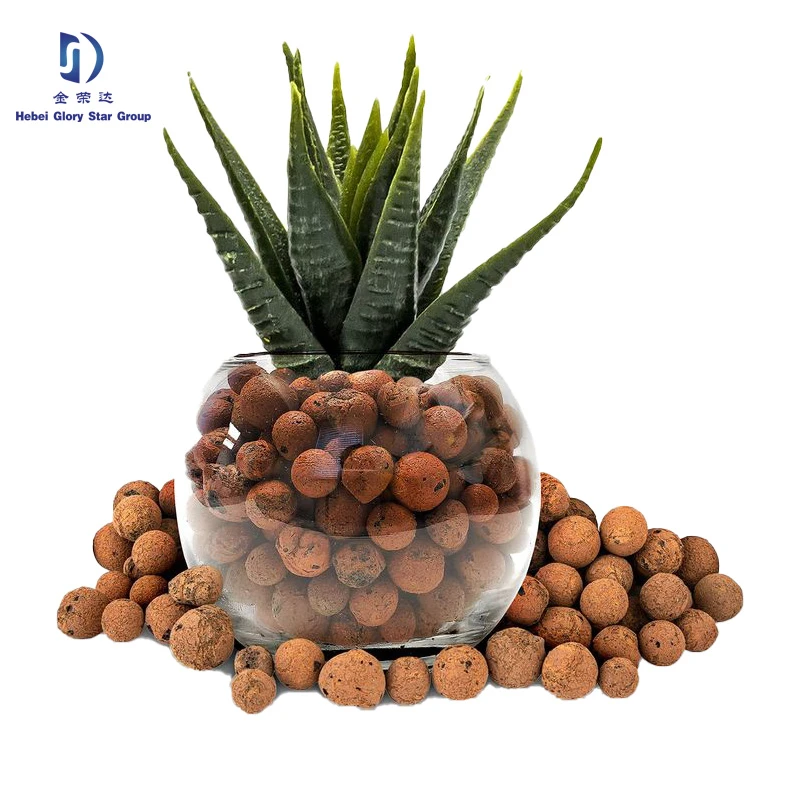
Having spent over a decade working hands-on in various industrial equipment environments, I can say with some confidence that bulk expanded clay pebbles are one of those quietly underrated materials. Sure, they don’t carry the flash of some high-tech composites or fancy polymers, but their rugged simplicity and effectiveness have made them a staple in hydroponics, construction, and water filtration systems alike.
Oddly enough, their appeal goes beyond just being a lightweight aggregate. These clay pebbles typically start as natural clays that are fired in a rotary kiln. This process puffs up the clay, creating a porous, honeycombed structure inside each pebble. Engineers often point out how that microscopic porosity is what gives the pebbles their fantastic drainage and aeration qualities.
In real terms, that means when you're dealing with large-scale substrates for things like green roofs or hydroponic beds, these pebbles keep roots healthy by preventing waterlogging — and that’s something every grower, industrial gardener, or system designer swears by.
Over the years, I’ve noticed a few details that can really separate good bulk clay pebbles from the just-okay variants. Particle size uniformity is key. If the pebbles vary wildly in size, you can end up with inconsistent drainage layers or uneven packing. Likewise, durability under repeated wetting and drying cycles matters a ton, especially if you're cycling these materials over months or years. Many suppliers test their pebbles for crushing strength and abrasion resistance, but it’s not unusual to find that those specs don’t quite match field realities.
| Property | Value | Unit |
|---|---|---|
| Bulk Density | 450–650 | kg/m³ |
| Particle Size Range | 8–16 | mm |
| Water Absorption | 15–25 | % |
| pH | 6.5–8.5 | - |
| Crushing Strength | 5–10 | MPa |
I remember a project where a local horticulturalist was struggling with root rot on his hydroponic lettuce farm. Swapping out standard substrate media for clean, evenly sized bulk expanded clay pebbles improved his drainage and aeration so much that disease pressure dropped significantly within weeks. That kind of practical, hands-on proof is invaluable. Clients often ask if customized particle size distributions are possible—and many suppliers can offer that, including proprietary blends to suit specific pH or nutrient retention needs.
Speaking of suppliers, it’s worth comparing some common vendors. I’ve summarized in the table below a few key considerations: price, availability, typical particle size range, and quality certifications. Obviously, the logistics side can differ a lot, especially for bulk orders destined overseas.
| Vendor | Price (per ton) | Particle Size (mm) | Certifications | Lead Time |
|---|---|---|---|---|
| Glorystar Export | $120–130 | 8–16 | ISO 9001, SGS | 2–3 weeks |
| Vendor B | $110–125 | 6–15 | ISO 14001 | 3–5 weeks |
| Vendor C | $115–135 | 7–14 | CE Mark | 4 weeks |
On the quality front, the certifications like ISO 9001 and SGS testing often give me peace of mind, but I always advise field testing. Sometimes, the real-world conditions can differ from lab results—if you’re reusing substrate, for example, degradation or dust accumulation becomes a concern.
Frankly, the versatility of bulk expanded clay pebbles is what keeps them relevant, even as new hydroponic substrates come to market. They don’t break down, they don’t rot, and they’re chemically inert enough not to interfere with nutrient mixes. Plus, I suppose I’m fond of their tactile nature—it’s oddly satisfying to run your fingers through a bag of them, knowing they’re doing a ton of heavy lifting underground, so to speak.
Bottom line? Whether you’re in the business of industrial landscaping, eco-building, or hydroponic systems installation, bulk expanded clay pebbles are likely worth a spot in your materials list. Reliable, easy to handle, and proven over decades.
References
- Industry tests on expanded clay aggregates, Journal of Advanced Materials, 2018.
- Comparison of substrates for hydroponic lettuce production, Horticultural Reviews, 2020.
- Glorystar Export official product datasheets, 2023.
Post time: Jan-05-2026


.png "About")