

The Ultimate Guide to Ferric Oxide: Properties and Industrial Uses
In the world of inorganic chemistry and industrial manufacturing, ferric oxide plays a pivotal role. Also known as iron(III) oxide, this compound is more than just "rust"; it is a versatile material used in everything from high-performance pigments to advanced water treatment processes. Understanding its chemical stability and physical properties is essential for procurement managers and engineers looking to optimize their production cycles. In this comprehensive guide, we will explore the different forms of ferric oxide, its diverse applications, and how to choose the right grade for your specific industrial needs.

Chemical Characteristics of Ferric Oxide
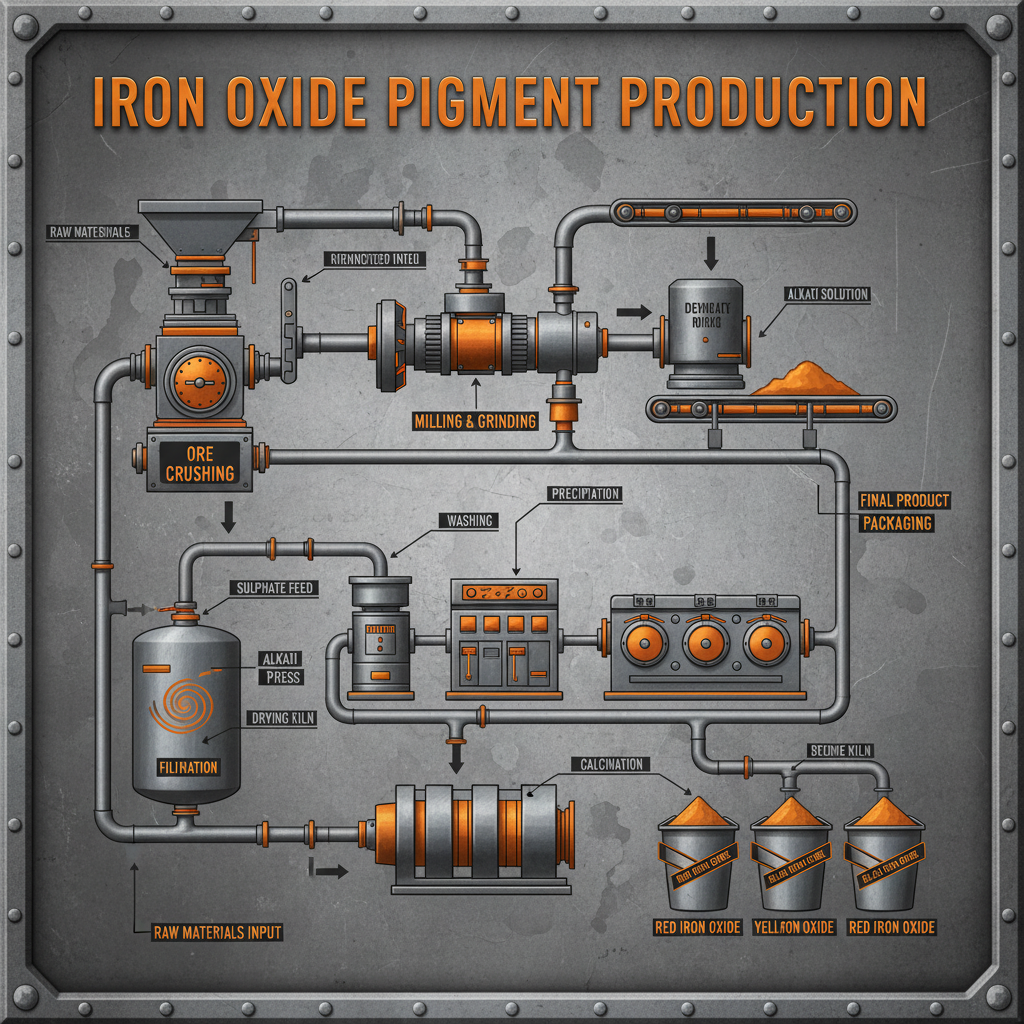
The compound ferric oxide exists primarily in two forms: hematite ($\text{Fe}_2\text{O}_3$) and magnetite ($\text{Fe}_3\text{O}_4$). Hematite is characterized by its distinct reddish-brown color and is highly stable, making it an ideal choice for pigments. Magnetite, on the other hand, possesses magnetic properties that are indispensable in electronics and magnetic recording media. Both forms are characterized by high thermal stability and resistance to further oxidation, ensuring that products formulated with these oxides maintain their integrity over long periods. The particle size and purity of the oxide significantly influence its reactivity and dispersion capabilities in various solvents.
Key Highlights: Ferric oxide is prized for its chemical stability, non-toxicity, and ability to provide intense coloration in construction materials and coatings.
Industrial Applications of Ferric Oxide
The versatility of ferric oxide allows it to serve multiple sectors. In the construction industry, it is used as a primary pigment for coloring concrete, bricks, and paving stones. In the environmental sector, it acts as a powerful coagulant in wastewater treatment, helping to remove phosphorus and heavy metals from industrial effluent. Furthermore, it is used in the production of polishing compounds for glass and metal, providing a fine abrasive that ensures a mirror-like finish without deep scratching. Its role in the ceramics industry is equally vital, contributing to the characteristic colors of traditional pottery and stoneware.
Primary Use Cases:
• Pigments: High-opacity red and yellow shades for paints.
• Water Treatment: Efficient phosphorus removal in municipal plants.
• Abrasives: Precision polishing for high-end optics.
• Catalysts: Used in the Haber process for ammonia synthesis.
Comparing Grades of Ferric Oxide
Not all ferric oxide is created equal. Depending on the intended application, buyers must choose between synthetic and natural grades, or between different purity levels. Synthetic oxides offer consistent color and particle size, which is critical for the paint and plastics industries. Natural oxides, while slightly more variable, are often preferred for large-scale masonry projects due to their cost-effectiveness. The following table provides a clear comparison to help you identify the optimal grade for your project requirements.
Ferric Oxide Technical Specifications
To ensure quality control in industrial processes, it is vital to adhere to strict technical specifications. When sourcing ferric oxide, parameters such as oil absorption, pH value, and moisture content must be verified. High-grade ferric oxide used in pigments is often processed to have a specific surface area, which enhances its dispersing power in liquid mediums. Below is a standard specification table for high-purity industrial red ferric oxide.
Storage and Handling Guidelines
Proper storage is critical to maintaining the quality of ferric oxide. While it is chemically stable, it can be prone to clumping if exposed to high humidity. We recommend storing the powder in a cool, dry, and well-ventilated warehouse, away from strong acids or reducing agents that could alter its oxidation state. When handling the material, workers should use appropriate PPE, including dust masks and gloves, to avoid respiratory irritation from fine particles. Using moisture-proof packaging, such as HDPE bags or lined drums, ensures that the product remains free-flowing and ready for immediate industrial use.
Future Trends in Ferric Oxide Research
Innovation continues to drive new uses for ferric oxide. Recent research has focused on nanotechnology, creating "nano-ferric oxide" particles for targeted drug delivery and advanced bio-medical imaging. In the energy sector, ferric oxide derivatives are being explored as electrode materials for next-generation batteries and supercapacitors due to their high theoretical capacity and eco-friendly nature. As industries shift toward "green chemistry," the demand for sustainable production methods for these oxides is increasing, pushing manufacturers to adopt closed-loop recycling systems to reduce environmental impact while maintaining high purity.
Conclusion: Optimizing Your Supply Chain with Quality Ferric Oxide
Choosing the right ferric oxide can significantly impact the quality, color, and efficiency of your end products. Whether you are in wastewater treatment, construction, or high-tech manufacturing, prioritizing purity and particle size consistency is key to operational success. By partnering with experienced exporters who understand the technical nuances of iron oxides, businesses can ensure a stable supply chain and superior product performance. Invest in quality materials today to secure the durability and aesthetic of your products tomorrow.
Frequently Asked Questions (FAQs)
What is the difference between ferric oxide and ferrous oxide?
The primary difference lies in the oxidation state of the iron. Ferric oxide ($\text{Fe}_2\text{O}_3$) contains iron in the +3 oxidation state and is typically red or brown. Ferrous oxide ($\text{FeO}$), however, contains iron in the +2 oxidation state and is generally black. While ferric oxide is highly stable and used extensively as a pigment, ferrous oxide is more reactive and is often used as an intermediate in the production of other iron compounds or as a specialized additive in metallurgy.
Is ferric oxide safe for use in residential construction?
Yes, ferric oxide is generally considered non-toxic and safe for use in residential construction. It is widely used in concrete dyes and paving stones because it is chemically inert and does not leach harmful chemicals into the soil or groundwater. However, as with any fine powder, it is recommended to avoid inhaling the dust during the mixing process. Proper safety gear and following manufacturer guidelines ensure a safe application for both workers and residents.
How does ferric oxide help in wastewater treatment?
Ferric oxide (and its soluble salts) acts as a coagulant. In wastewater, it neutralizes the negative electrical charges on suspended particles and phosphorus, causing them to clump together into larger "flocs." These flocs then settle to the bottom of the treatment tank through sedimentation, allowing the clear water to be separated from the contaminants. This process is highly effective for removing phosphates, which prevents eutrophication in natural water bodies.
Where can I source high-purity ferric oxide for industrial use?
For high-purity and industrial-grade materials, it is best to source from specialized exporters who provide detailed COA (Certificate of Analysis) and MSDS (Material Safety Data Sheets). Companies like Glory Star Export specialize in providing high-quality ferric oxide tailored to specific industrial needs, ensuring that the purity and particle size meet the rigorous standards required for pigments, catalysts, or water treatment applications.
Post time: Apr-16-2026




.png "About")