Understanding mica quality is paramount for industries ranging from high-voltage electronics to premium cosmetics. As a mineral known for its exceptional dielectric strength, thermal stability, and pearlescent luster, the physical and chemical purity of mica directly determines the performance and safety of the end product. In a global market where precision is non-negotiable, selecting the right grade of mica can be the difference between an efficient industrial component and a catastrophic system failure.
From a global perspective, the demand for high-grade mica has surged due to the rapid expansion of the green energy sector and the digitization of infrastructure. Whether it is the insulating properties of Muscovite or the high-temperature resistance of Phlogopite, the nuances of mica quality impact everything from the lifespan of a capacitor to the stability of a ceramic glaze. This critical material serves as a silent backbone for modern electrical engineering and specialized manufacturing.
However, the industry faces a significant challenge: the variability of raw mineral deposits. Natural mica varies wildly in transparency, flake size, and impurity levels, making standardized quality control essential. By focusing on rigorous testing and processing—such as dehydration and synthetic refinement—manufacturers can ensure that the mica quality meets the strict ISO and industry-specific standards required for high-performance applications.
Defining the Standards of Mica Quality
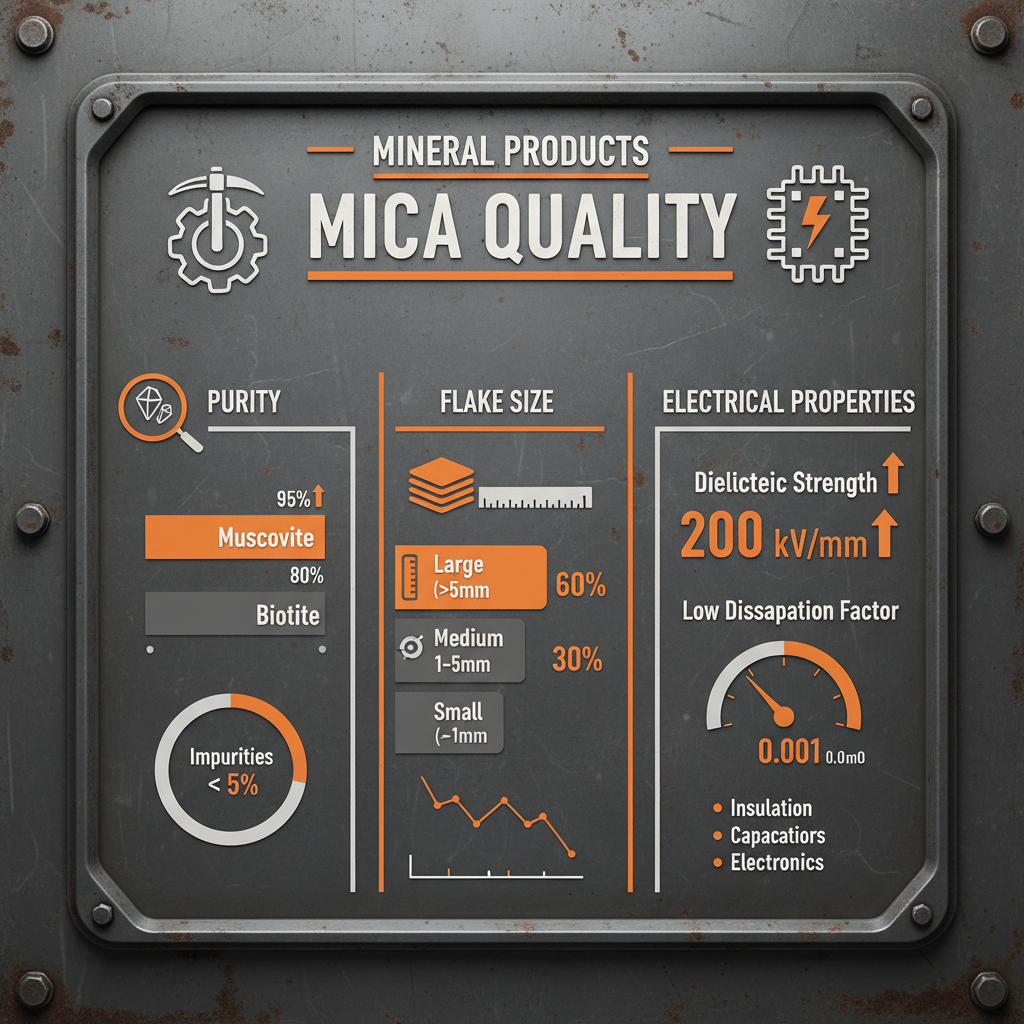
At its core, mica quality refers to the degree of purity, structural integrity, and physical consistency of the mineral flakes or powders. In technical terms, this involves assessing the mineral's chemical composition—specifically the absence of unwanted iron or titanium oxides—and its physical properties, such as the "cleavability" of the sheets. High-quality mica must exhibit a perfect crystalline structure that allows it to be split into incredibly thin, transparent sheets without cracking.
For industrial procurement, the definition of quality shifts based on the end-use. In the electronics sector, quality is measured by dielectric strength and resistance to electrical breakdown. In the cosmetics and pigment industry, however, the focus is on the "aspect ratio" of the flakes and the uniformity of the refractive index. Therefore, establishing a comprehensive quality baseline requires a multi-dimensional approach that combines spectroscopic analysis with physical stress testing.
Key Factors Influencing Mica Quality
One of the primary determinants of mica quality is the mineral's purity. Natural deposits often contain inclusions of quartz, feldspar, or other silicates. These impurities can create "weak points" in the mica sheet, reducing its insulating capacity and causing premature failure in high-voltage applications. Refining processes, including the removal of iron oxides, are essential to achieving the high-transparency and high-dielectric grades required for aerospace and medical equipment.
Another critical factor is the flake size and uniformity. In applications such as epoxy flakes or pearlescent pigments, the consistency of the particle size distribution (PSD) is vital. If the flakes are too irregular, the resulting coating will lack a smooth finish, and the structural reinforcement in composites will be uneven. Advanced milling and screening technologies are now used to ensure that each batch of mica adheres to a strict micron-level specification.
Lastly, the thermal stability of the mineral plays a huge role. Depending on whether the material is Muscovite, Phlogopite, or Synthetic Mica, its ability to withstand extreme heat varies. High-quality Phlogopite, for instance, is prized for its ability to remain stable at temperatures exceeding 800°C. Ensuring that the material does not dehydrate or deform under thermal stress is a hallmark of premium mica quality.
Global Industrial Applications of High-Grade Mica
Across the globe, the implementation of high mica quality materials is evident in the automotive and energy sectors. In electric vehicle (EV) batteries, mica-based insulators prevent thermal runaway by providing a robust barrier between cells. This application requires a level of purity that prevents any conductive particles from contaminating the insulating layer.
In the realm of high-end construction and interior design, dyed mica flakes and epoxy flakes are used to create durable, aesthetically pleasing surfaces. Here, the mica quality is judged by the vibrancy of the color absorption and the resistance to UV degradation, ensuring that floors and countertops maintain their luster for decades in demanding environments.
Furthermore, in remote industrial zones—such as deep-sea drilling or Arctic mining—equipment is subjected to extreme pressures and temperatures. The use of high-quality Sericite and Muscovite mica in the gaskets and seals of this machinery ensures operational reliability. Without stringent quality control, the risk of material fatigue would increase, leading to costly downtime and environmental hazards.
Comparative Analysis of Mica Quality Methods
Evaluating mica quality is not a one-size-fits-all process. Different industrial standards require different testing methodologies. For example, "Method A" might focus on chemical purity via X-ray Fluorescence (XRF), while "Method B" prioritizes physical morphology through Scanning Electron Microscopy (SEM). The choice of method depends on whether the mica is being used as a bulk filler or a precision insulator.
When comparing these methods, the goal is to balance accuracy with cost-efficiency. While SEM provides an unparalleled look at the crystalline structure, it is often too slow for batch-level quality control. Consequently, most manufacturers employ a hybrid approach, using rapid purity tests for every lot and detailed morphology studies for quarterly audits to ensure long-term mica quality.
Effectiveness of Mica Quality Assessment Methods
Economic Advantages and Long-Term Value
Investing in superior mica quality yields significant long-term economic benefits. While lower-grade mica may offer a lower initial procurement cost, it often leads to higher failure rates and increased maintenance expenses. In high-voltage capacitors, for instance, a slight dip in purity can cause a dielectric breakdown, resulting in the replacement of entire electrical arrays. By utilizing premium materials, companies reduce their Total Cost of Ownership (TCO) and minimize the risk of costly product recalls.
Beyond the financial metrics, high-quality mica enhances brand trust and reliability. In the luxury cosmetics industry, the consistent sparkle and smooth texture provided by high-grade mica pigments are direct indicators of a premium product. This emotional connection—trust in the product's performance and aesthetic—creates a sustainable competitive advantage. Innovation in mica quality therefore transforms a raw mineral into a strategic business asset.
Future Trends in Mica Innovation
The future of mica quality is being reshaped by the rise of synthetic mica. Unlike natural mica, synthetic versions are engineered in controlled environments, allowing for absolute purity and customized particle sizes. This eliminates the variability associated with mining and provides a "green" alternative that avoids the ethical concerns often linked to natural mica sourcing in certain regions.
Digital transformation is also playing a role through the integration of AI-driven quality sorting. Automated optical sorting systems can now identify and remove impurities from mica flakes in real-time, significantly increasing the yield of high-grade materials. This automation ensures that the mica quality remains consistent across massive production volumes, supporting the scalability of global supply chains.
Furthermore, we are seeing a move toward "functionalized" mica. By coating the surface of high-quality mica flakes with nano-materials, researchers are creating hybrid composites with enhanced thermal conductivity and superior electrical shielding. These innovations are paving the way for the next generation of ultra-compact electronics and high-efficiency energy storage systems.
Overcoming Challenges in Quality Consistency
One of the most persistent challenges in the industry is the inherent heterogeneity of mineral deposits. Even within a single mine, the mica quality can vary between different veins. To combat this, leading manufacturers have implemented "blending strategies," where various grades of raw mica are mixed in precise ratios to create a standardized product. This ensures that the customer receives a consistent material regardless of the raw source.
Another hurdle is the environmental impact of processing. Traditional dehydration and purification methods can be energy-intensive. The industry is currently shifting toward closed-loop water systems and low-temperature chemical treatments to maintain high mica quality while reducing the carbon footprint. This alignment of quality and sustainability is no longer optional but a requirement for global market access.
Ultimately, the solution to consistency lies in transparency and certification. By adhering to international standards and providing detailed Certificates of Analysis (CoA) with every shipment, suppliers can bridge the gap between raw material variability and industrial precision. This commitment to transparency ensures that the end-user can integrate the mica into their processes with total confidence.
Comparative Analysis of Mica Quality Grades and Industrial Suitability
|
Mica Grade/Type
|
Purity Level (1-10)
|
Primary Application
|
Reliability Score
|
| Premium Muscovite |
9.5 |
HV Electrical Insulation |
9.8 |
| Industrial Phlogopite |
8.2 |
High-Temp Furnaces |
9.0 |
| Synthetic Mica |
10.0 |
Precision Electronics |
9.9 |
| Cosmetic Grade Mica |
7.8 |
Pearlescent Pigments |
8.5 |
| Sericite Powder |
7.0 |
Ceramic Glazes |
8.0 |
| Mica Scrap/Recycled |
5.5 |
General Fillers |
6.5 |
FAQS
High mica quality ensures a high dielectric strength and low electrical conductivity. Impurities like iron oxides can create conductive paths within the mica, leading to electrical leakage or catastrophic short-circuiting in high-voltage environments. Pure mica provides a stable, non-conductive barrier that protects sensitive components.
Natural mica quality is subject to geological variability and may contain mineral inclusions. Synthetic mica, however, is produced through chemical synthesis, resulting in near-perfect purity, consistent particle size, and an absence of contaminants. This makes synthetic mica the preferred choice for high-precision medical and aerospace applications.
Yes, through several refining processes. Dehydration removes chemically bound water to increase thermal stability, while ultrasonic cleaning and chemical leaching can remove surface impurities. Advanced milling and screening are also used to standardize the flake size, effectively elevating the overall mica quality for specific industrial needs.
In cosmetics, the "shimmer" effect is created by light reflecting off the mica's surface. If the flake size is inconsistent, the light scatters irregularly, resulting in a dull or patchy appearance. High-quality cosmetic mica has a uniform aspect ratio, ensuring a smooth, pearlescent glow and consistent color distribution.
The most reliable way is to request a Certificate of Analysis (CoA) that includes XRF data for chemical purity and a particle size distribution (PSD) report. For critical applications, performing a dielectric breakdown test or using an SEM to check for crystalline defects is recommended to ensure the mica quality meets your technical specifications.
While the initial cost is higher, high-quality mica actually reduces maintenance costs. Because it is more stable and resistant to degradation, the end-products have longer lifespans and lower failure rates. In the long run, the reduction in downtime and replacements makes premium mica a more cost-effective investment.
Conclusion
In summary, mica quality is a multi-faceted metric that encompasses chemical purity, physical morphology, and thermal resilience. From the critical insulation required in EV batteries to the aesthetic precision of pearlescent pigments, the grade of mica used directly influences the safety, durability, and market value of the final product. By prioritizing rigorous testing and embracing innovations like synthetic production and AI sorting, industries can ensure they are utilizing this remarkable mineral to its fullest potential.
Looking forward, the shift toward sustainable sourcing and engineered materials will only heighten the importance of quality standardization. As we enter an era of ultra-miniaturized electronics and green energy infrastructure, the demand for "zero-defect" mineral components will grow. We encourage manufacturers and engineers to move beyond cost-based procurement and instead adopt a value-based approach to mica quality to secure a competitive edge in the global market. Visit our website: www.glorystarexport.com








.png "About")