Barite mineral is a naturally occurring mineral composed of barium sulfate (BaSO₄). Globally, it plays a critical role in numerous industries, from oil and gas drilling to medical imaging and even plastics manufacturing. Its high density and chemical inertness make it an indispensable component in many applications, influencing international trade and supply chains. Understanding the properties and applications of barite is vital for professionals across these sectors and for ensuring efficient and safe industrial processes.
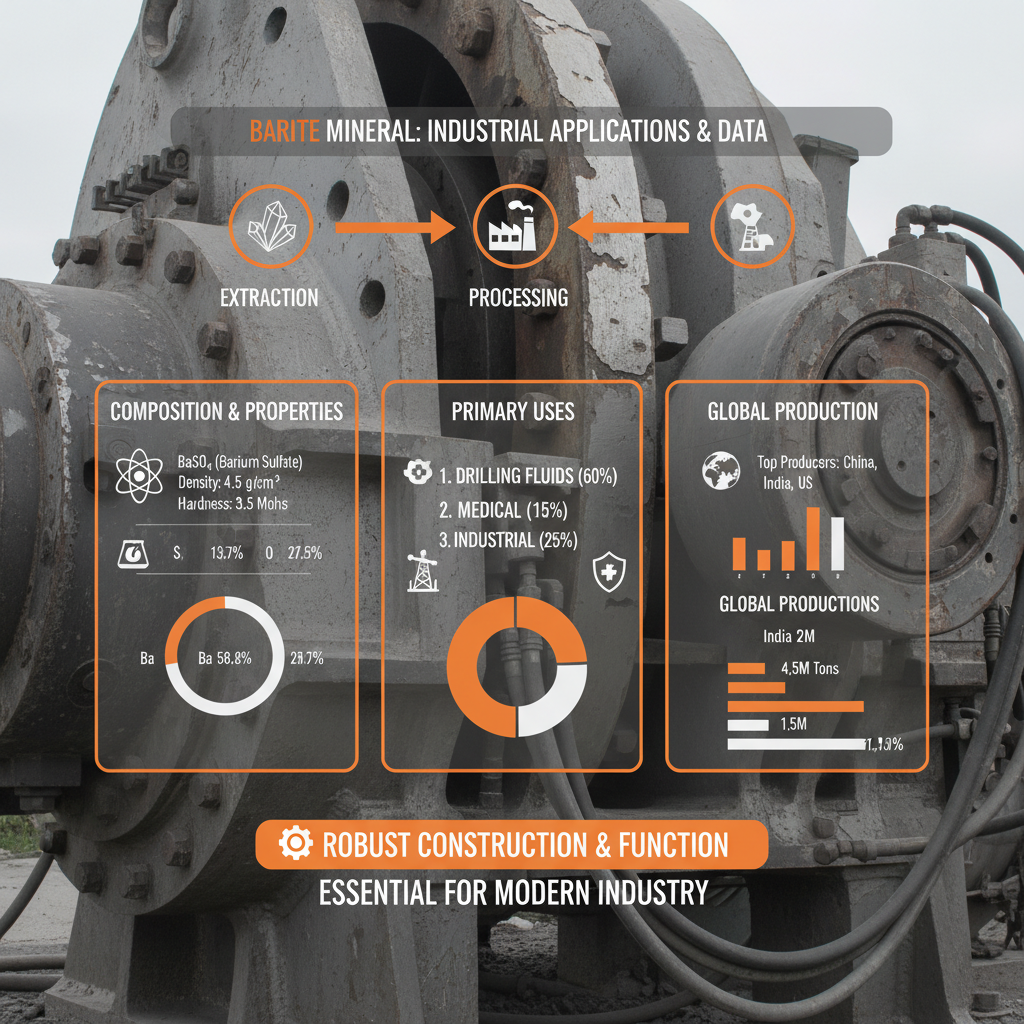
The demand for barite is closely tied to global economic activity, particularly in the energy sector. According to recent data from the United States Geological Survey (USGS), global barite production reached approximately 8.6 million metric tons in 2022, with major producing countries including China, India, and the United States. However, fluctuating oil prices, geopolitical instability, and increasingly stringent environmental regulations present ongoing challenges to the barite industry, driving the need for innovative extraction and processing techniques.
The strategic importance of barite mineral extends beyond its industrial uses. Its unique properties contribute to advancements in medical technology, such as its use as a contrast agent in X-ray imaging, enhancing diagnostic capabilities and improving patient care. Moreover, research continues to explore new applications for barite in areas such as noise reduction and radiation shielding, further solidifying its role in modern society.
Introduction to Barite Mineral
Barite mineral’s prominence stems from its exceptional physical and chemical properties. It’s a relatively soft mineral, scoring 3.5 on the Mohs hardness scale, making it easy to process. However, its high specific gravity – typically between 4.4 and 4.5 – is its defining characteristic, crucial for its primary application as a weighting agent in drilling fluids.
Beyond drilling, the mineral’s inertness and opacity have led to its utilization in diverse sectors. It is a key ingredient in producing specialized plastics, coatings, and even some medical applications, highlighting its versatility and continued importance in modern manufacturing processes.
Defining Barite and its Industrial Significance
Simply put, barite is barium sulfate (BaSO₄), a mineral forming as veins, concretions, and crystalline masses in sedimentary and igneous rocks. Its importance isn't in its intrinsic value as a gemstone, but in its function as a crucial industrial resource. It's not readily soluble in water or acids, making it environmentally stable in many applications.
The connection to modern industry is profound. The oil and gas sector relies heavily on barite as a weighting agent in drilling mud. This mud counteracts the formation pressure, preventing blowouts and ensuring safe and efficient drilling operations. Without barite mineral, modern oil extraction would be significantly more hazardous and expensive.
Furthermore, the medical field employs finely ground barite as a contrast agent in radiographic imaging of the gastrointestinal tract. This allows for clear visualization of the digestive system, aiding in diagnosis and treatment planning. Its inert nature makes it safe for internal use in these procedures.
Key Characteristics of Barite Mineral
One fundamental characteristic of barite mineral is its high density, ranging from 4.4 to 4.5 g/cm³. This makes it significantly denser than most other commonly used minerals, making it ideal for applications requiring substantial weight in a small volume.
Another key attribute is its chemical inertness. Barite is highly resistant to attack by acids, alkalis, and other chemicals, ensuring its stability and longevity in various industrial environments. This resistance prevents contamination and degradation of the materials it interacts with. It is also relatively soft, facilitating efficient grinding and processing.
Barite also exhibits excellent opacity to X-rays, a property leveraged in medical imaging. This opacity allows it to function as an effective contrast agent, enhancing the visibility of internal organs and structures during diagnostic procedures. Its crystalline structure contributes to its unique optical properties, and variations in trace element composition can influence its color, ranging from white and gray to yellow, brown, and red.
Global Applications of Barite Mineral
The primary application of barite mineral is in the oil and gas industry, accounting for over 80% of global demand. It’s used as a weighting agent in drilling fluids to control wellbore pressure and prevent blowouts. Regions with significant oil and gas exploration, like the Middle East, North America, and parts of Asia, are major consumers of barite.
Beyond oil and gas, barite finds use in the medical industry as a contrast agent for X-ray imaging, particularly of the digestive system. Hospitals and diagnostic centers worldwide rely on this application. It is also used in the production of specialized plastics, paints, and coatings, enhancing their density and opacity. These are common across manufacturing sectors globally.
In post-disaster relief operations, barite can be incorporated into concrete for radiation shielding, particularly important in areas affected by nuclear incidents. Furthermore, it’s utilized in the manufacture of brake linings and soundproofing materials, contributing to safety and quality of life in numerous communities.
Barite Application Breakdown by Sector
Advantages and Long-Term Value of Barite
The primary advantage of using barite lies in its cost-effectiveness compared to alternative weighting agents. While other minerals can achieve similar densities, barite’s relative abundance and ease of extraction contribute to a lower price point, reducing operational costs for oil and gas companies.
From a sustainability perspective, barite is a relatively inert mineral, minimizing environmental impact during its use. Responsible mining practices are, however, crucial. The long-term value is sustained by the continuing need for reliable and safe drilling operations and its crucial role in advanced medical technologies, ensuring consistent demand.
Future Trends in Barite Utilization
Ongoing research focuses on optimizing barite processing techniques to reduce waste and improve resource efficiency. The development of micro-barite particles for enhanced contrast agents in medical imaging is also gaining momentum, potentially leading to more accurate diagnoses.
Furthermore, advancements in nanotechnology may explore using barite in composite materials for specialized applications, such as lightweight yet dense shielding materials for aerospace or defense industries. Exploring the potential of barite as a component in energy storage solutions is also an emerging area of interest.
Challenges and Sustainable Solutions in Barite Mining
One significant challenge is the environmental impact of barite mining, including habitat disruption and potential water contamination. Implementing responsible mining practices, such as land reclamation and water treatment, is essential to mitigate these effects.
Another challenge is the increasing demand for high-purity barite, requiring investments in advanced processing technologies. Sustainable solutions involve developing closed-loop systems to minimize waste and maximize resource recovery, along with fostering collaboration between mining companies, researchers, and environmental organizations.
Ensuring a stable and ethical supply chain is also crucial, requiring transparency and responsible sourcing practices to avoid conflicts and promote fair labor standards. Investing in innovative extraction technologies that minimize environmental footprint and maximize resource utilization is key to the long-term sustainability of the barite industry.
Summary of Challenges and Solutions in Barite Mineral Mining
| Challenge |
Environmental Impact |
Economic Considerations |
Proposed Solution |
| Habitat Disruption |
Loss of biodiversity |
Reclamation costs |
Implement comprehensive land reclamation programs |
| Water Contamination |
Pollution of water sources |
Water treatment expenses |
Employ advanced water treatment technologies |
| Waste Generation |
Environmental pollution |
Waste disposal costs |
Develop closed-loop systems for resource recovery |
| Purity Requirements |
N/A |
Investment in processing tech |
Invest in advanced purification technologies |
| Supply Chain Ethics |
Reputational risk |
Potential disruptions |
Implement transparent and responsible sourcing |
| Regulatory Compliance |
Environmental penalties |
Compliance costs |
Maintain strict adherence to environmental regulations |
FAQS
Barite mineral is overwhelmingly used as a weighting agent in drilling fluids in the oil and gas industry. Its high density allows it to counteract pressure in the wellbore, preventing blowouts and ensuring safe and efficient drilling. It also has niche applications in medical imaging and the production of certain plastics and paints, but these account for a smaller percentage of overall use.
Barite itself is chemically inert and doesn't pose a significant environmental threat. However, the mining and processing of barite can have environmental impacts, such as habitat disruption and potential water contamination. Responsible mining practices, including land reclamation and water treatment, are crucial to minimize these effects and promote sustainable barite production.
Barite grades are primarily classified based on purity and density. API (American Petroleum Institute) grade barite is the standard for oil and gas drilling and requires a minimum barium sulfate content of 48%. Other grades exist for specialized applications, such as medical imaging, which require higher purity levels and finer particle sizes.
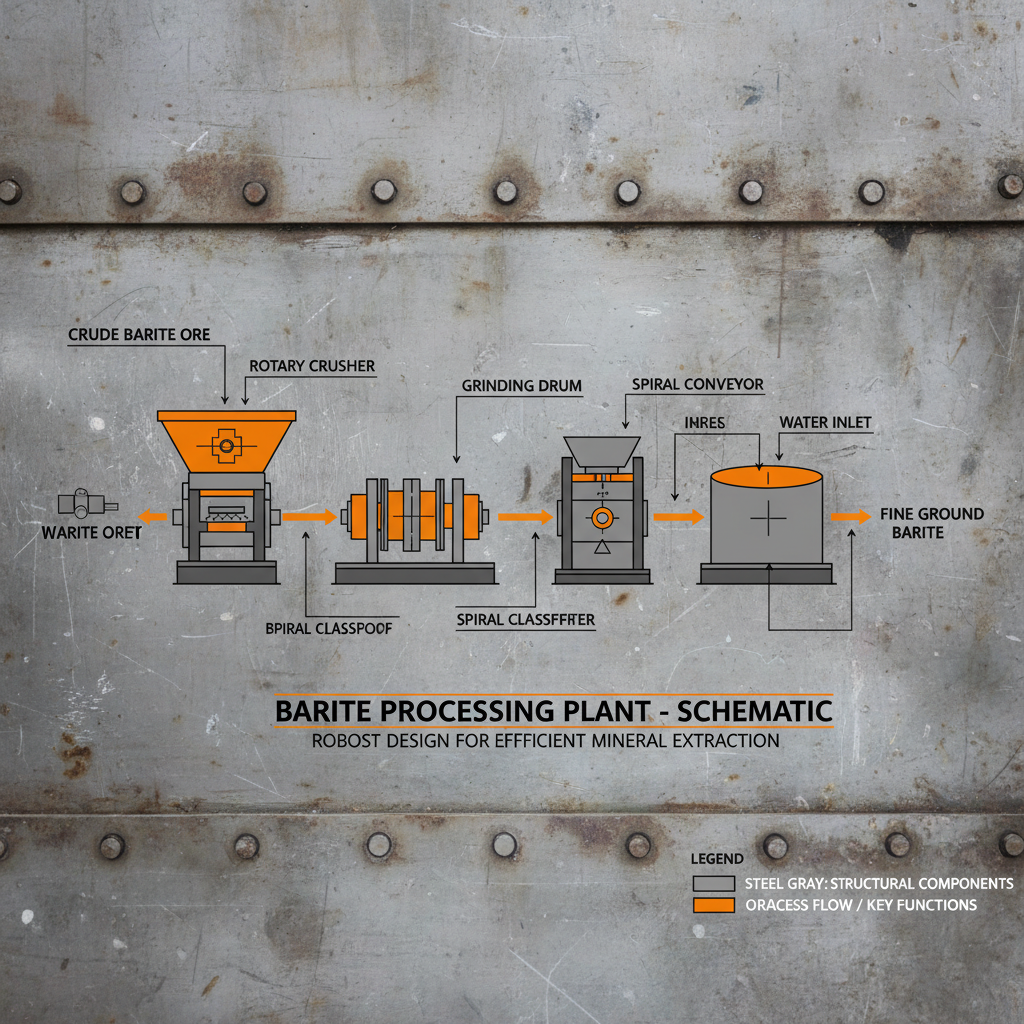
Barite is typically extracted through both surface and underground mining methods, depending on the geological characteristics of the deposit. Surface mining involves removing overburden to access the barite ore, while underground mining utilizes shafts and tunnels to extract the mineral from deeper deposits. After extraction, the ore is crushed, ground, and processed to remove impurities and achieve the desired particle size and purity.
Exposure to high concentrations of barite dust can cause baritosis, a benign pneumoconiosis. However, barite is generally considered to be non-toxic. Prolonged exposure, particularly in mining and processing environments, requires proper ventilation and respiratory protection to minimize dust inhalation.
Numerous suppliers globally offer barite mineral. Reputable suppliers will provide detailed specifications regarding purity, density, and particle size distribution. It is crucial to choose a supplier that adheres to industry standards and can provide documentation verifying the quality and origin of the barite.
Conclusion
In conclusion, barite mineral remains a vitally important industrial resource, underpinning critical processes in the oil and gas industry, medical technology, and numerous manufacturing applications. Its unique physical and chemical properties, combined with its relative abundance, ensure its continued relevance in a variety of sectors. Prioritizing responsible mining practices and investing in innovative processing technologies are crucial for maximizing its long-term value and minimizing environmental impact.
Looking ahead, continued research and development will unlock new applications for barite, potentially expanding its role in emerging fields like energy storage and advanced materials. By embracing sustainable practices and fostering collaboration across the supply chain, we can ensure that barite mineral continues to contribute to a more sustainable and innovative future. Visit our website: www.glorystarexport.com





.png "About")